For the first time in generations, unions are enjoying a powerful resurgence—across workplaces, industries, and demographics. From service workers to high-tech professionals, more Americans are turning to unions to win the stability and respect they’ve been denied for far too long. But the rising popularity comes with a critical truth: union membership isn’t growing nearly as fast as public support, and it’s not because workers don’t want unions. It’s because the rules of the game are rigged against them.
Workers Want Unions. The Law Makes It Hard to Form One.
Poll after poll shows overwhelming support for unions, especially among young people and workers in emerging industries. Yet union membership remains far lower than it would be if workers could freely choose representation. Why? Because the United States—unlike most industrialized nations—has labor laws that actively stifle organizing.
Current federal laws allow employers to delay elections, intimidate workers, hold mandatory anti-union meetings, fire organizers with little consequence, and drag out bargaining for years. Even when workers win their union election, they often struggle to obtain a first contract because employers face minimal penalties for stalling or refusing to bargain.
The result is a system where the legal right to form a union exists on paper—but in practice, workers face a gauntlet designed to wear them down.
A Broken Economy Has Workers Demanding a Voice
Workers today are navigating soaring costs, stagnant wages, and record corporate profits. Housing, groceries, health care, and childcare are all more expensive than ever—yet paychecks have barely budged. People see executives earning hundreds of times more than front-line workers, even as those workers struggle just to keep up.
Unions offer the surest path to balance. Collective bargaining delivers higher pay, better benefits, safer workplaces, and real career stability. But as long as labor laws tilt toward employers, too many workers are blocked from accessing these protections.
A New Generation Is Ready to Organize—But Meeting Old Barriers
Young workers are driving today’s labor wave, bringing energy and innovation to new organizing campaigns. They’re unionizing coffee shops, universities, logistics hubs, nonprofits, media outlets, and tech companies.
But even the most energized campaigns run into the same structural roadblocks: union-busting consultants, illegal retaliation, and endless legal delays. These tactics aren’t accidental—they’ve become a business model for corporations taking advantage of weak laws and underfunded enforcement.
What’s remarkable is that despite formidable obstacles, young workers are pushing ahead anyway. Their determination underscores just how strong the demand for unions really is.
High-Profile Wins Have Shifted Public Perception
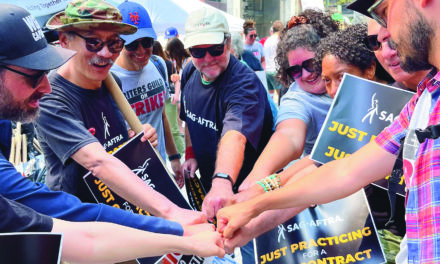
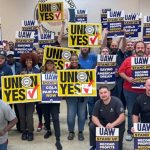
Workers are paying attention to a string of major labor victories—autoworkers securing historic raises and COLA protections, nurses and educators winning staffing guarantees, entertainment workers fighting for AI protections, and federal employees battling attempts to restrict collective bargaining rights.
These wins show that when workers overcome the legal hurdles to unionizing, they make transformative gains. Every victory exposes the disconnect between the popularity of unions and the difficulty of forming one under today’s rules.
Political Gridlock Leaves Workers to Fight for Themselves
Decades of congressional inaction have allowed labor laws to decay while corporations gain more power. Efforts to modernize labor rights—like the PRO Act—have stalled, leaving workers to navigate a system created for a very different economy.
As lawmakers fail to keep up, unions fill the gap. Through collective bargaining, workers can win safety standards, wage fairness, job security, and benefits that politicians have repeatedly failed to deliver.
Despite the Obstacles, Momentum Is Only Growing
The growing popularity of unions is not a trend—it’s a demand for fundamental fairness. Workers know that unions rebuild the middle class, reduce inequality, lift wages, and give people real control over their working lives. And they know that membership numbers remain low not because unions are unwanted, but because powerful interests have spent decades weakening the laws that protect workers’ rights.
That gap between support and membership tells the real story: America doesn’t suffer from a lack of worker interest in unions—it suffers from a lack of worker freedom to form them.
And still, workers are organizing. They are refusing to accept a broken status quo. They are pushing back against corporate power and weak laws alike. As more Americans recognize the stakes—and see what unions deliver—this momentum will continue to grow.