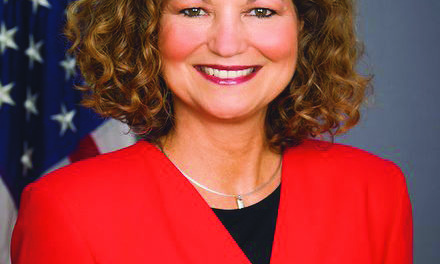
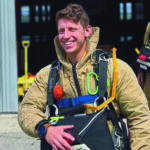
Sam Forstag, a smokejumper and former NFFE Local 60 vice president, won election in Montana’s 1st Congressional District
A logger, a smokejumper, a machinist and an ironworker were among the union members who won major victories in the 2026 midterm elections. Alongside them, educators, public employees and skilled trades workers secured offices in state legislatures and local government, strengthening workers’ voices in decisions that reach into every workplace and household.
Their victories were part of a much larger breakthrough. In its post-election report, the AFL-CIO announced that 639 union members and counting had won elections nationwide, setting the stage for record union representation in public office next year. From county governments to Congress, working people stepped forward to help make the decisions that shape their livelihoods.
Those victories bring firsthand workplace experience into government. A representative who has worked under a union contract understands what collective bargaining can mean for a family.
Someone who has trained apprentices, represented coworkers or fought for safe staffing brings practical knowledge to debates about workforce development, public services and workplace protections.
Union Members Head to Washington
In Maine, fifth-generation logger and longtime union member Troy Jackson defeated Susan Collins to win a seat in the U.S. Senate. The former Maine Senate president entered politics after organizing alongside fellow loggers, building a career around the economic struggles of working people. His election sends a representative with deep roots in the labor movement to Washington.
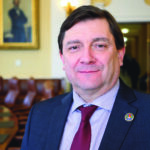
Troy Jackson, a logger and longtime union member, is the senator-elect for Maine
Jackson’s victory followed an extensive grassroots labor organizing effort. The Maine AFL-CIO reported that more than 530 union members and community volunteers knocked on 65,000 doors during the final two months of the campaign. Those conversations connected the election to the cost of living, health care and the economic pressures facing Maine families.
Michigan voters elected Abdul El-Sayed to the U.S. Senate. The physician and former public health official has belonged to several unions, including AFT, SEIU, the National Writers Union and AAUP. The AFL-CIO identified him among the card-carrying union members whose victories will strengthen workers’ representation in the next Congress.
In Montana, smokejumper and former National Federation of Federal Employees Local 60 Vice President Sam Forstag won the state’s 1st Congressional District. NFFE-IAM celebrated the election of a union leader whose career includes protecting communities from wildfires and representing federal employees. He will bring that experience to congressional decisions about public lands, staffing and services Americans rely on.
In northeast Ohio, Brian Poindexter, a member of Ironworkers Local 17, defeated incumbent Max Miller in the 7th Congressional District. A 20-year ironworker and former apprentice training coordinator, Poindexter brings practical knowledge of skilled trades and the training that prepares workers for lasting careers.
Pennsylvania voters elected Bob Brooks, a longtime IAFF Local 735 leader and president of the Pennsylvania Professional Fire Fighters Association, to represent the 7th Congressional District. A firefighter for two decades, Brooks built his campaign around public service and working-class representation. IAFF members supported his campaign through phone banks and door knocking in the Lehigh Valley.
In New York, UAW members Claire Valdez and Darializa Avila Chevalier won the 7th and 13th Congressional Districts, respectively. Valdez’s union experience includes bargaining and representing coworkers at Columbia University through Local 2110. Avila Chevalier is a member of Local 2325, the Association of Legal Aid Attorneys. Their victories bring two more voices shaped by workplace organizing to Congress.
California elected pediatrician Richard Pan, a member of the Union of American Physicians and Dentists, an AFSCME affiliate, to the 6th Congressional District. His experience caring for patients will inform his work on health care access and the conditions facing health professionals.
Wisconsin voters elected union member and emergency room nurse Mitchell Berman to the 1st Congressional District. They also reelected Mark Pocan, a longtime IUPAT member, in the 2nd District. Together, those victories give Wisconsin workers representatives with direct experience in union workplaces.
New Jersey voters retained two union voices in Congress by reelecting Donald Norcross of IBEW Local 351 and Analilia Mejia of SEIU 32BJ. Norcross has served in Congress since 2014; Mejia won a special election earlier this year before securing her November victory.
Workers Win in State and Local Government
Texas delivered significant victories for union members. James Talarico, a member of the Texas State Employees Union, CWA Local 6186, won election to the U.S. Senate. Fellow TSEU member Gina Hinojosa won the governor’s race, bringing union experience to the state’s highest office.
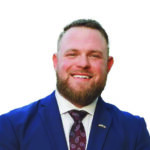
Taylor Rehmet, an IAM member, won his race for the State Senate in Texas. Rehmet had previously won that seat in a special election
Texas voters also returned Taylor Rehmet, a machinist, Air Force veteran and IAM Local 776B leader, to state Senate District 9 for a full term. Rehmet first flipped the historically Republican seat in a special election earlier this year. His November victory secured the seat beyond that initial breakthrough.
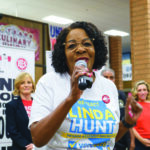
Linda Hunt, Nevada Culinary Workers Union Local 226
In Nevada, Culinary Workers Local 226 celebrated the victories of two members and shop stewards: Linda Hunt, reelected to the state Assembly, and Joe Spica, newly elected to that chamber. Both bring experience representing hospitality workers and organizing alongside coworkers to Carson City.
Ohio’s gains extended to the General Assembly. Four union members won election for the first time: Scott DiMauro of the Ohio Education Association, Davida Russell of the Ohio Association of Public School Employees, Nicole Sigurdson of SEIU and Eugene Miller of AFT. They will join reelected union members Sean Brennan of OEA and Dan Troy of SMART.
In North Carolina, SMART member Lorenza Wilkins defeated incumbent Allen Chesser to win state House District 25. In Wisconsin, AFSCME Local 1215 member Ben Gruber, a conservation warden, won Assembly District 51. Oregon voters reelected Dacia Grayber, a firefighter and member of IAFF Local 1660, to House District 28. In Illinois, Chicago Teachers Union member Karen Zaccor won reelection to the Chicago Board of Education.
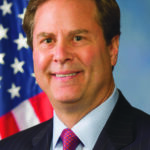
Representative Donald Norcross was re-elected in New Jersey. Norcross is a member of IBEW Local 351
Impressively, New Jersey’s AFL-CIO reported 40 wins among its 44 labor candidates. Winners included Charles Hassler of IBEW Local 94, elected Salem County commissioner; Belinda Fontanez of CWA Local 1036, elected Pemberton mayor; and Adolfo DiCosmo of Bricklayers Local 7, elected to Roselle Park Council.
These victories represent just a small sampling of the union members who won office in this year’s midterms. Across the country, working people stepped forward to serve their communities, bringing union experience and a commitment to working families to every level of government.
Organizing Made the Difference
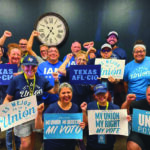
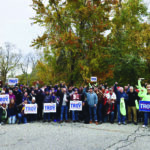
Behind those candidates stood union volunteers talking with coworkers, calling fellow members and knocking on neighbors’ doors. The AFL-CIO described its election program as its largest midterm mobilization, reaching more than 16 million union voters. Its program operated in 35 states, with outreach that included union households whose members had not previously been contacted by a union volunteer.
The results demonstrate why that sustained work matters. Unions build relationships through daily efforts to solve problems, defend coworkers and improve conditions. Election organizing draws on that trust, giving workers an opportunity to discuss how government decisions affect their jobs and families.
The responsibility now is to turn these victories into results: stronger organizing rights, safe workplaces, affordable health care, secure retirements and investment in apprenticeships and public services. Electing union members puts people with relevant experience in positions to act. Continued organizing will help turn that experience into policy and hold elected officials accountable.
Working people helped change the political map. By stepping forward as candidates themselves, they also changed who will be in the room when the next decisions are made.